Invite & Earn Feature in Matka Apps – Complete Development Guide
Introduction
Mobile applications today need more than just a simple interface to provide a good user experience. Features such as user notifications, account management, transaction records, referral systems, and support options help create a more complete application.
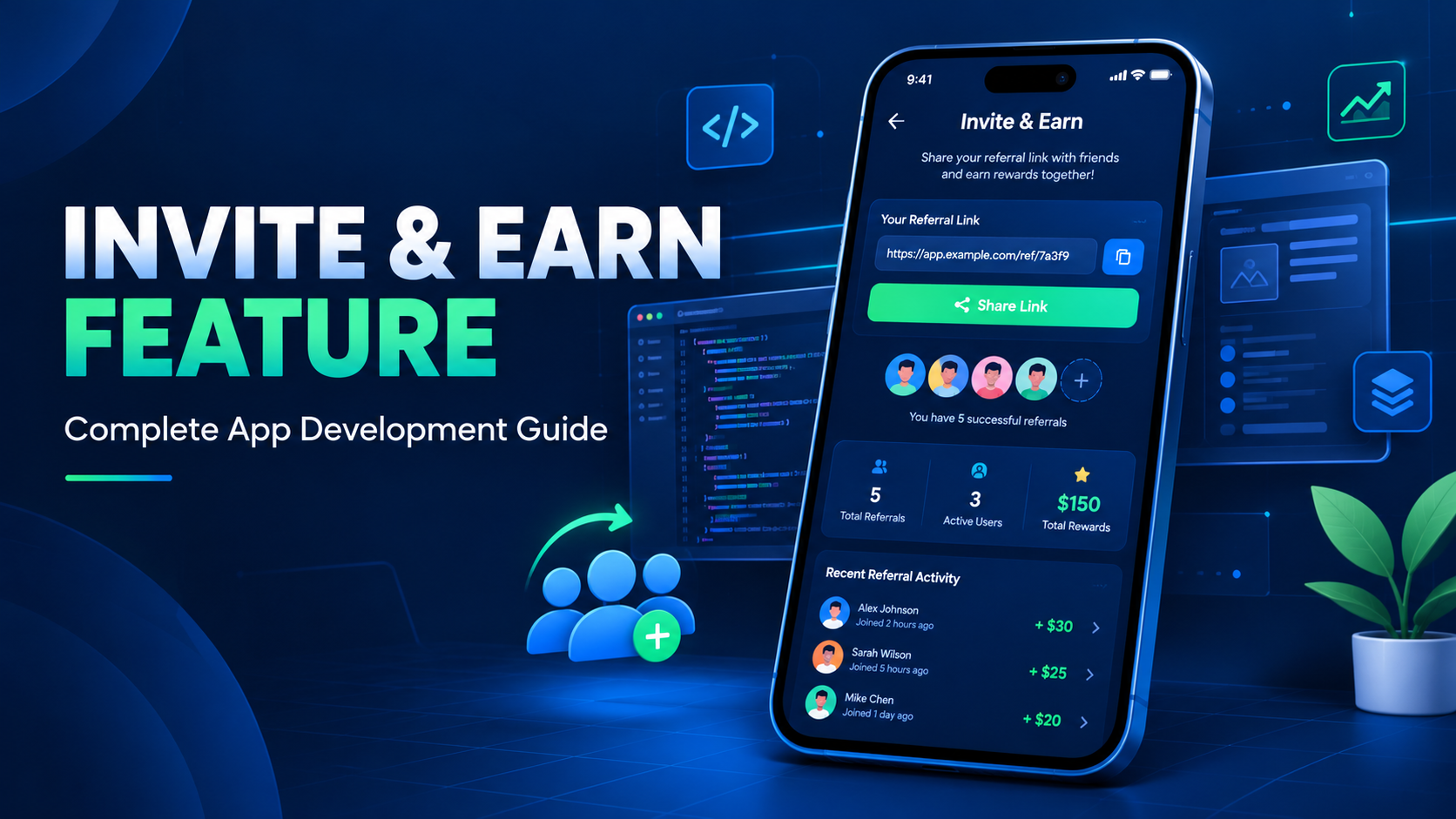
One feature that developers often consider when planning a mobile application is the Invite & Earn feature. It allows users to share a referral link or code with other people and track eligible referral activity through their accounts.
For businesses exploring custom application development, understanding how this feature works is important. A properly designed referral system needs more than a share button. It requires referral tracking, clear reward rules, secure account verification, accurate records, and an administrative system for managing activity.
At Matka Development, we work with custom app and software development concepts, including mobile applications, web applications, and Laravel-based admin panels. In this guide, we explain the key components of an Invite & Earn system, how it can be structured, and what developers should consider before implementing it.
What Is the Invite & Earn Feature in an App?
The Invite & Earn feature is a referral system that allows an existing user to invite another person through a unique referral link or code.
Depending on the application's purpose and applicable laws, a referral program may provide non-cash benefits, promotional credits, subscription benefits, or other rewards when clearly defined eligibility conditions are met.
For example, a general application might allow a registered user to share a referral link with a friend. The application records the referral when the friend registers through that link. If the referral satisfies the published terms, the system updates the referral status and records any eligible reward.
A well-designed referral feature should make the process easy to understand for users while giving administrators sufficient control over referral records and reward rules.
How Does an Invite & Earn System Work?
A referral system usually follows a straightforward process. The exact steps depend on the application, reward model, and verification requirements.
1. User Registration
The user creates an account and receives a unique referral code or link. The system associates this referral identifier with the user's account.
2. Sharing the Referral Link
The application provides a convenient option to share the link through supported messaging applications, email, or other sharing methods.
3. New User Registration
When another person opens the referral link, the application can preserve the referral information and associate it with the new registration, subject to its referral rules and privacy settings.
4. Referral Verification
The backend checks whether the referral meets the program's eligibility requirements. Depending on the use case, checks may include account verification, duplicate registrations, referral expiration, and other applicable conditions.
5. Referral Status Update
Once the conditions are satisfied, the referral record is updated. Users may see statuses such as Pending, Verified, Approved, or Rejected.
6. Reward Record and Notification
If the referral qualifies for a permitted reward, the system records the result and can notify the relevant user. The reward history should remain available for review.
This workflow helps keep referral activity organized and reduces the need for manual recordkeeping.
Important Features of an Invite & Earn System
A referral system should be designed around usability, transparency, and reliable data management. The following components are commonly useful in a custom application.
1. Unique Referral Code
Every eligible account can receive a unique referral code. The backend should ensure that codes cannot be duplicated or easily manipulated.
A referral code can be displayed on the user's profile or inside a dedicated referral section. Developers should also define whether codes can expire, be changed, or be disabled.
2. Referral Link Generation
A shareable referral link makes it easier for users to invite others without manually entering a code.
The link should direct users to the appropriate registration page or supported app screen. If the application is available on multiple platforms, developers can consider suitable deep-linking and fallback behavior.
3. Referral Dashboard
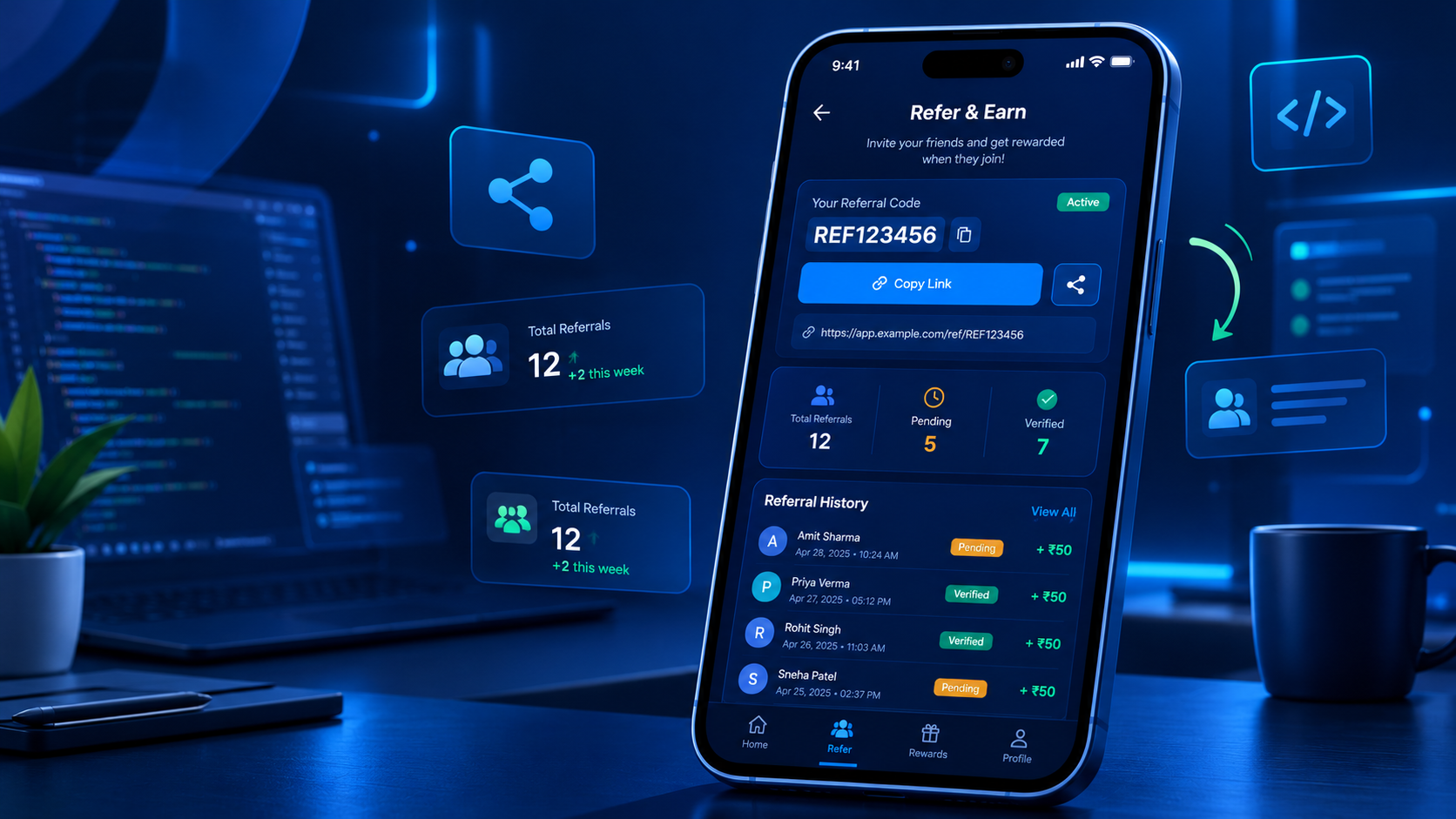
A referral dashboard gives users a clear view of their referral activity. Depending on the application, it may display:
Total invitations shared
Successful registrations
Pending referral verification
Approved and rejected referrals
Reward history, where applicable
Referral program terms and conditions
The dashboard should display accurate information from the backend rather than relying only on values stored on the user's device.
4. Referral History
A referral history section allows users to review their past referral activity.
Each record can include the referral date, current status, and any relevant explanation. Personal information belonging to another user should remain protected.
5. Push Notifications
Notifications can inform users when a referral has been recorded, verified, or rejected.
For example, an application may send a message when a referral is successfully verified. Notifications should reflect actual backend events and should not promise rewards before eligibility is confirmed.
6. Clear Reward Rules
The application should explain its referral conditions before users participate. These rules can cover eligibility, verification requirements, reward limits, expiration dates, and dispute handling.
Clear terms help prevent misunderstandings and make the system easier to administer.
Backend Development for an Invite & Earn Feature
The frontend provides the user interface, but most referral logic belongs on the backend. This is where the application generates referral identifiers, stores records, checks eligibility, and maintains the status of each referral.
For a custom mobile or web application, developers may implement the backend using a suitable server-side framework and database.
Referral Database Structure
A referral system may use separate database tables for users, referral codes, referral relationships, reward records, and audit logs.
A typical referral record may contain:
Referral record ID
Referring user's internal ID
Referred user's internal ID, where applicable
Referral code or campaign identifier
Creation timestamp
Verification status
Reward status
Administrative review details, if required
Database relationships should be designed carefully to avoid duplicate records and incorrect associations.
API Integration
The application may use APIs for actions such as retrieving referral details, recording a registration, checking referral status, and displaying referral history.
Sensitive actions should be processed on the server. A user should not be able to approve a referral or modify a reward merely by changing a request sent from the mobile app.
Laravel Admin Panel
A Laravel-based admin panel can provide a central interface for reviewing referral activity and managing program settings.
Laravel is one possible framework for this type of backend; the appropriate technology depends on the application's requirements, hosting environment, security needs, and expected usage.
Admin Panel Features for Referral Management
An administrative dashboard can help authorized staff monitor referral activity without directly modifying database records.
Useful administrative features may include the following.
Referral Overview Dashboard
The dashboard can summarize total referral records, pending reviews, verified referrals, rejected referrals, and reward records. Date filters can help administrators examine activity over a selected period.
Referral Program Settings
Administrators may need controls for enabling or disabling a referral campaign, setting eligibility conditions, defining expiration dates, and managing permitted reward rules.
Changes should be recorded and restricted to authorized roles.
User and Referral Management
Authorized administrators can search referral records, review their status, and investigate reported problems.
Sensitive actions should require appropriate permissions, and significant changes should be recorded in an audit log.
Notification Management
The panel can support approved notification templates for referral status updates. Messages should be accurate and consistent with the program's published terms.
Reports and Analytics
Reporting tools can help administrators understand how a referral program is being used. Depending on the application, reports may include invitation counts, registration conversion, verification rates, and referral-related support requests.
Reports should use clearly defined metrics so that administrators do not confuse invitations with verified referrals.
Security Considerations for Referral System Development
Security is an important part of any application that manages user accounts and reward records. A referral feature should not rely on trust in the mobile interface alone.
Prevent Duplicate Referrals
The backend should validate referral relationships and apply suitable restrictions to repeated or conflicting registrations.
Validate Referral Codes
Referral codes should be checked on the server. Expired, disabled, malformed, or otherwise ineligible codes should not be accepted.
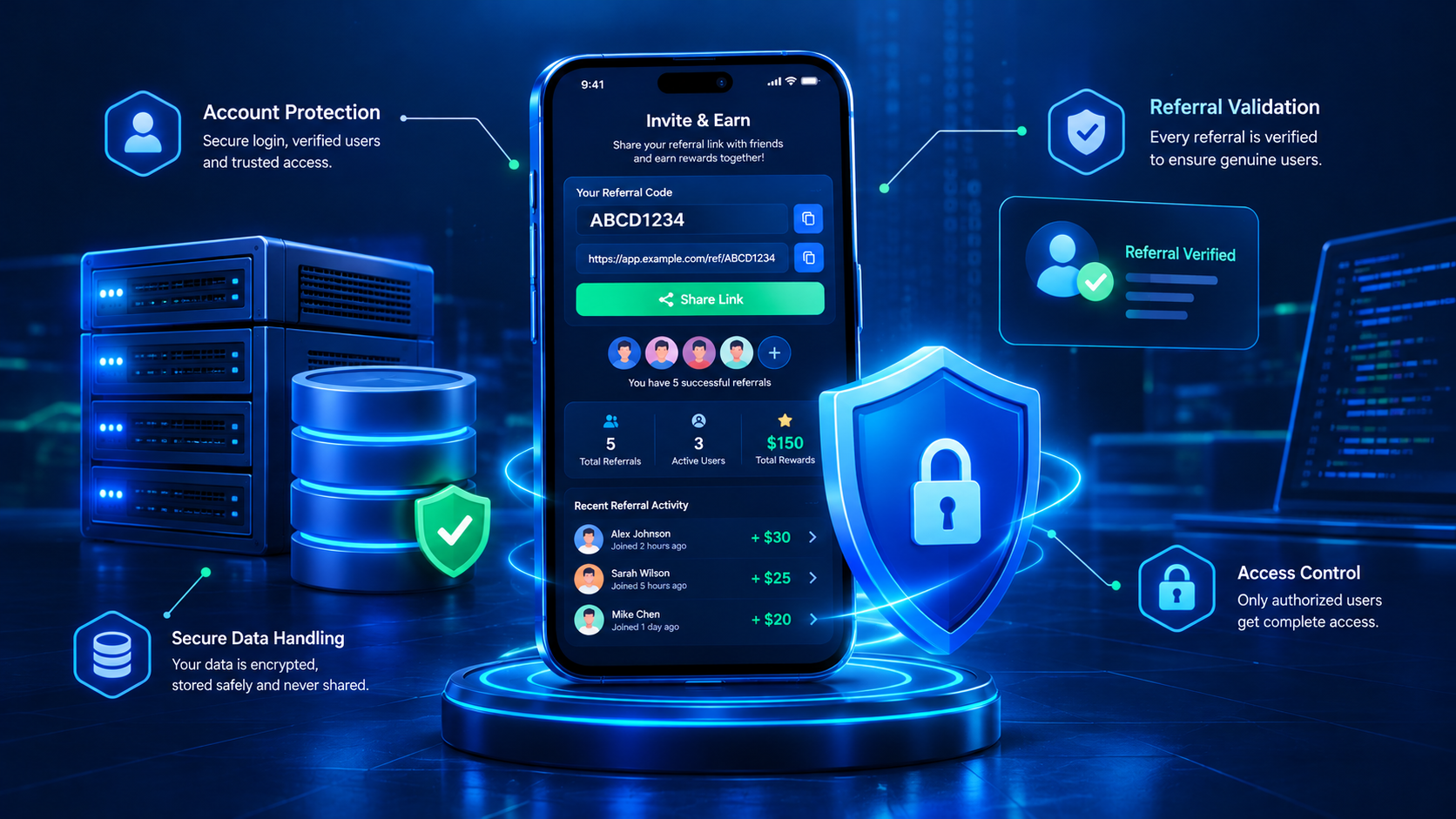
Protect User Information
Only the information necessary to operate the referral program should be collected and displayed. Access to referral records should follow appropriate privacy and authorization rules.
Apply Role-Based Access Control
Administrative permissions should be separated according to responsibility. For example, an employee reviewing records may not need permission to change system-wide settings.
Maintain Audit Logs
Important events, including referral status changes and administrative actions, should be recorded with timestamps and relevant internal identifiers.
Test the System Before Launch
Testing should cover invalid referral codes, repeated requests, network interruptions, concurrent registrations, notification failures, and incorrect reward calculations.
These measures help make referral records more reliable and easier to maintain.
User Interface Design for an Invite & Earn Feature
A good referral interface should be simple enough for users to understand without needing technical instructions.
Consider including the following elements:
A dedicated Invite & Earn screen
A visible referral code or sharing link
A clearly labelled Share button
A referral activity summary
A list of referral statuses
A link to the program's terms and conditions
Helpful messages for pending or unsuccessful referrals
The design should also work across different screen sizes. Buttons need adequate spacing, text should remain readable, and the interface should provide useful feedback when a sharing action fails.
For web applications, the same information can be presented in a responsive dashboard that works on desktops, tablets, and mobile browsers.
Common Mistakes to Avoid During Development
Even a simple referral feature can create problems if its rules and backend logic are not planned properly.
1. Relying only on frontend validation: Referral eligibility must be checked on the server.
2. Allowing duplicate records: The database and application logic should prevent conflicting referral relationships.
3. Hiding program conditions: Eligibility requirements should be visible and understandable before participation.
4. Sending premature notifications: A referral should not be described as successful until the required checks have been completed.
5. Giving excessive admin permissions: Administrative access should follow the principle of least privilege.
6. Ignoring failed requests: The system should handle network errors and retries without creating duplicate records.
7. Skipping compliance reviews: Referral campaigns, incentives, and the application's wider business model should be reviewed under the laws and platform policies that apply to the intended use.
Addressing these issues early can reduce maintenance work and improve the overall user experience.
How Much Does Invite & Earn Feature Development Cost?
The cost of implementing an Invite & Earn feature depends on the application's existing architecture and the complexity of the referral program.
A basic implementation may include unique referral codes, link sharing, registration tracking, and a simple history screen. A more advanced implementation may require a dedicated admin panel, configurable campaign rules, analytics, notifications, detailed audit logs, and integrations with existing account-management systems.
The main factors affecting development cost include:
Whether the application already exists
Android, iOS, and web support requirements
Backend framework and database structure
Complexity of referral eligibility rules
Admin dashboard requirements
Testing, security, hosting, and maintenance
An accurate estimate should be prepared after reviewing the existing application, the expected user journey, and the required administrative controls. There is no single fixed price suitable for every project.
Why Choose a Custom App Development Company?
Custom application development allows businesses to build features around their actual technical and operational requirements rather than relying entirely on a generic template.
When evaluating a development company, consider its experience with mobile applications, web applications, backend APIs, database design, admin dashboards, security testing, and ongoing maintenance.
It is also important to review the proposed scope, ownership of the source code, documentation, hosting responsibilities, and support arrangements before starting a project.
Matka Development – Custom App and Software Development
Matka Development, available at https://matkadevelopment.com/, provides custom application and software development services.
Our stated development offerings include mobile applications, web applications, and Laravel-based administrative panels. Depending on the project scope, an application may include user account management, notifications, reporting tools, support features, and other business-specific modules.
For projects involving referral functionality, the technical requirements should be assessed individually. Any application connected with betting or wagering must also undergo the appropriate legal, licensing, security, and platform-policy review before development or deployment.
Businesses can explore the website to learn more about available development services and discuss their software requirements.
Frequently Asked Questions (FAQs)
1. What is the Invite & Earn feature in an app?
It is a referral feature that allows users to share a link or code with other people. The application tracks eligible referrals and records any benefits provided under its published program rules.
2. How does a referral code work?
A referral code identifies the user or campaign associated with an invitation. When a new user registers using the code, the backend records the relationship and checks whether it meets the relevant conditions.
3. Can an Invite & Earn feature be added to an existing app?
Yes. It can often be added to an existing application, provided its backend, database, authentication system, and architecture support the required functionality. The development team should assess the existing code before estimating the work.
Conclusion
The Invite & Earn feature is more than a referral link or a share button. A reliable implementation combines referral-code generation, registration tracking, eligibility checks, status management, notifications, and a well-structured administrative interface.
For developers and businesses planning a custom application, the best approach is to define the referral rules first and then build the backend, database, and user interface around those requirements.
Matka Development focuses on custom app and software development concepts, including mobile applications, web applications, and administrative panels. Visit https://matkadevelopment.com/ to explore the company's services and discuss project requirements.
Note: The legality of betting-related applications and promotional incentives varies by jurisdiction. Any proposed application should be reviewed for applicable laws, licensing requirements, and relevant app-store policies before launch.
Read next on the blog
- Satta Matka App Development & Matka Software Development 2026 Sep 11, 2026
- Secure User Notification System in Gaming Apps – Why It Matters Sep 5, 2026
- Automatic Deposit & Withdrawal System for Matka Apps – How It Works Aug 26, 2026
- How to Secure Your Matka Admin Panel from Hackers – 10 Essential Steps Aug 20, 2026
- Cost to Develop a Matka App in India (App + Panel + Website) – 2026 Guide Aug 8, 2026
- How to Create a Matka Admin Panel on Laravel – Step by Step (2026 Guide) Aug 5, 2026